A Simple Weekly Planning Routine for Homeschool Families
Homeschooling gives you flexibility, but flexibility works better with a little structure. A short weekly planning session, done at the same time each week, keeps things moving without needing a rigid schedule.
Pick a planning time
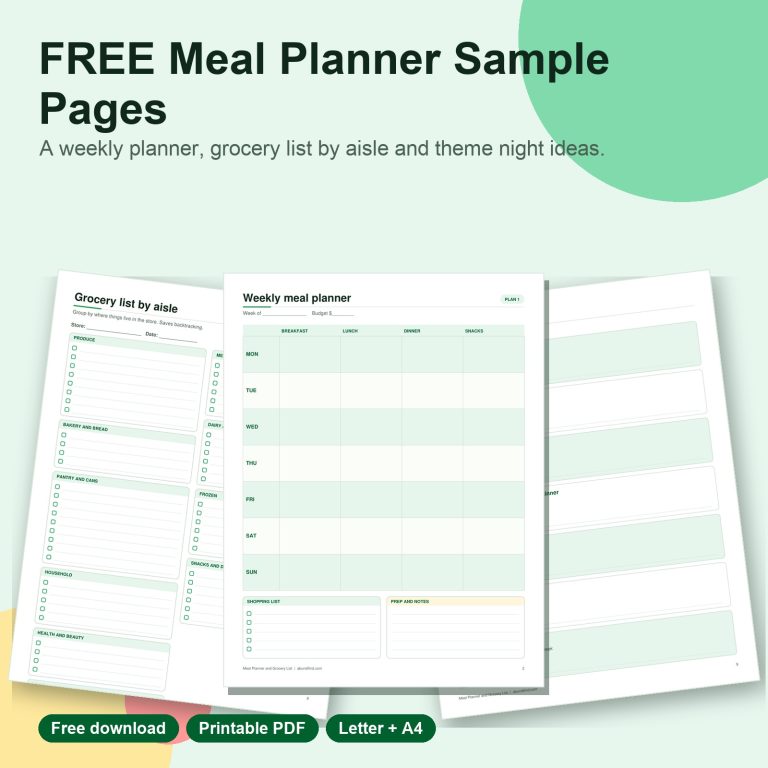
Choose a slot that you can protect, such as Sunday evening or Friday afternoon. Twenty to thirty minutes is enough. Make a cup of tea, and get your materials and calendar in front of you.
Look at the week ahead
Check what is happening: appointments, field trips, co-op days, visitors. Mark them first. Then see how much time is left for lessons each day. Many families find that on busy days, a short version of the plan is better than skipping it.
Choose a few core subjects each day
Plan the subjects you want to do every day, such as reading and math, then spread the others across the week. Write them in blocks, not exact minutes. A rough plan is easier to follow than an hour-by-hour one.
List the materials
For each subject, write down what you need. Books, worksheets, art supplies, a library hold. Gather them before the week starts, so a missing item does not derail a morning.
Plan short, regular practice
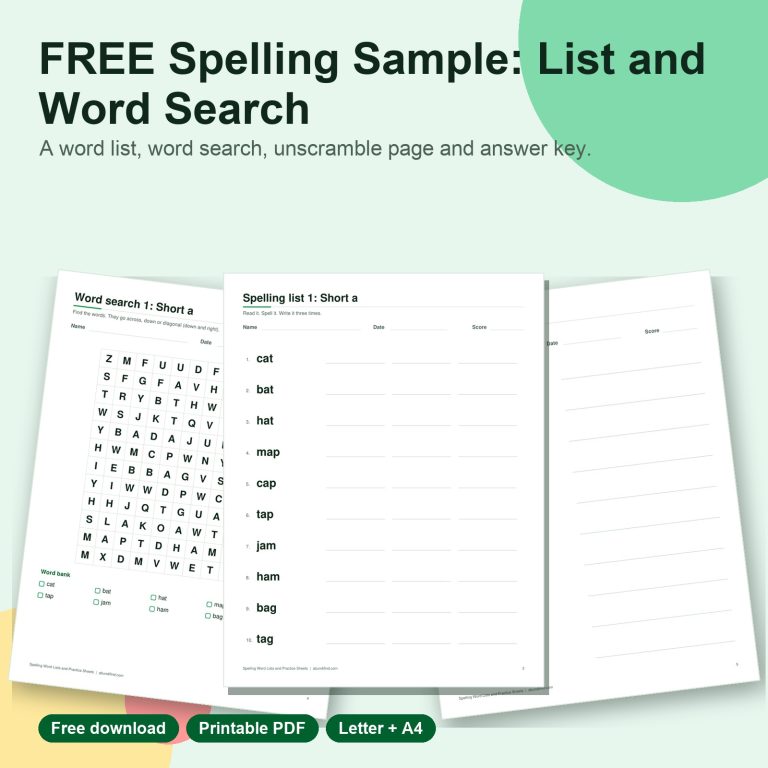
Short daily practice often works better than one long session. Ten to fifteen minutes on math facts or spelling, a little each day, adds up over a term.
Leave space
Do not fill every slot. Children ask questions that lead to detours, and some days go differently than planned. Leave one open block to catch up or follow an interest.
Make room for different ages
If you teach more than one child, look for subjects you can do together, such as read-aloud time, science, history or art, then give each child a short block of independent work. Staggering the one-on-one time, so one child works alone while you sit with another, keeps the morning running. Older children can sometimes help younger ones with a reading page or a game, which is good practice for both.
Review on Friday
At the end of the week, look at what you did. Mark what is finished and what carries over. Make a note of what worked. This takes five minutes and makes next week’s planning easier.
Printables that help
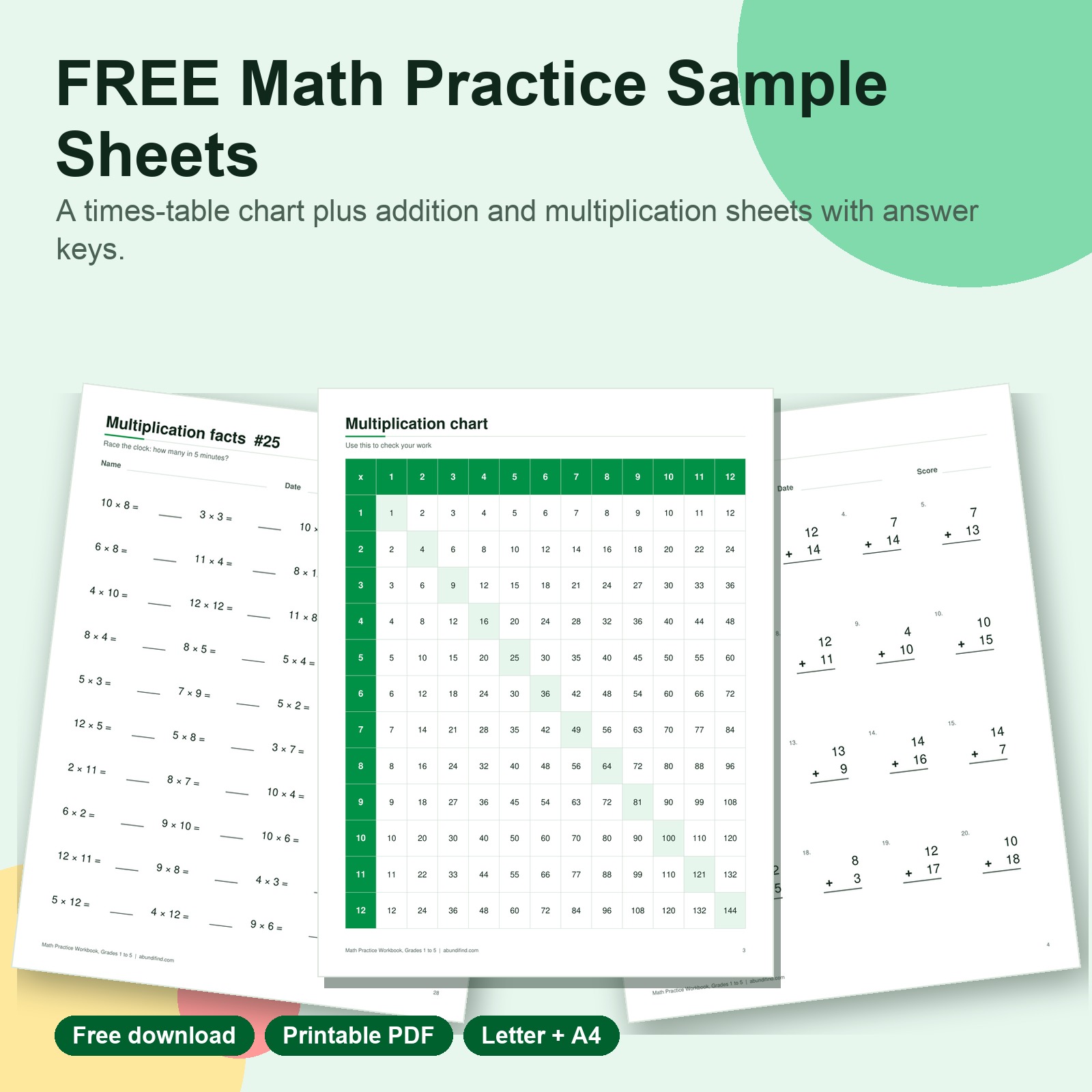
Our Homeschool Planner (undated) has pages for weekly plans, subjects, attendance and more. For practice, try the free math practice sample sheets, and see the full Math Practice Workbook if you want more.
Requirements for homeschooling vary by place. Check your local rules for record keeping.
You can also browse every free sample on the Free Printables page, or see all digital downloads.