How to Choose Three New Year Goals You Can Actually Keep
Most people start January with a long list. By February, the list feels heavy, and it is easy to drop it. A smaller number of clear goals, with small first steps, is easier to keep.
Start with three
Pick no more than three goals for the year. If you have ten ideas, group them. Several might fit under one theme, such as home, work or learning. Then choose the one that matters most from each group. Three is enough to feel progress and few enough to remember.
Write each goal as one sentence
A goal is clearer when you can say it in one sentence with a way to tell if you did it. Instead of “get organized,” try “clear out the hall closet by the end of March.” Instead of “read more,” try “finish one book a month.” You will know when you have done it.
Say why it matters
Write one or two lines on why the goal matters to you. On busy weeks, the reason is what brings you back to it.
Break it into steps
Ask what the first small step is, one you could do this week. Then add milestones for each quarter. A big goal feels easier when it is a series of small pieces.
Think about what could get in the way
Write down one or two things that might stop you, such as a busy season, or a habit you have. Then write what you could do about it. It takes a minute and often saves you later.
Put it on a calendar
Spread your goals across twelve months. A roadmap shows when each goal begins, and what you expect to have done by each month. It also stops you from starting everything on January 1.
Share it with someone
Tell a friend or family member what you are working on. You do not need an accountability partner, but saying it out loud makes it feel more real, and others may have ideas or want to join in.
Check in
Choose a day each month, such as the first Sunday, and look at your goals for ten minutes. What moved forward? What needs adjusting? Changing a goal part way through is not failure. It is how plans work.
Printable pages for it
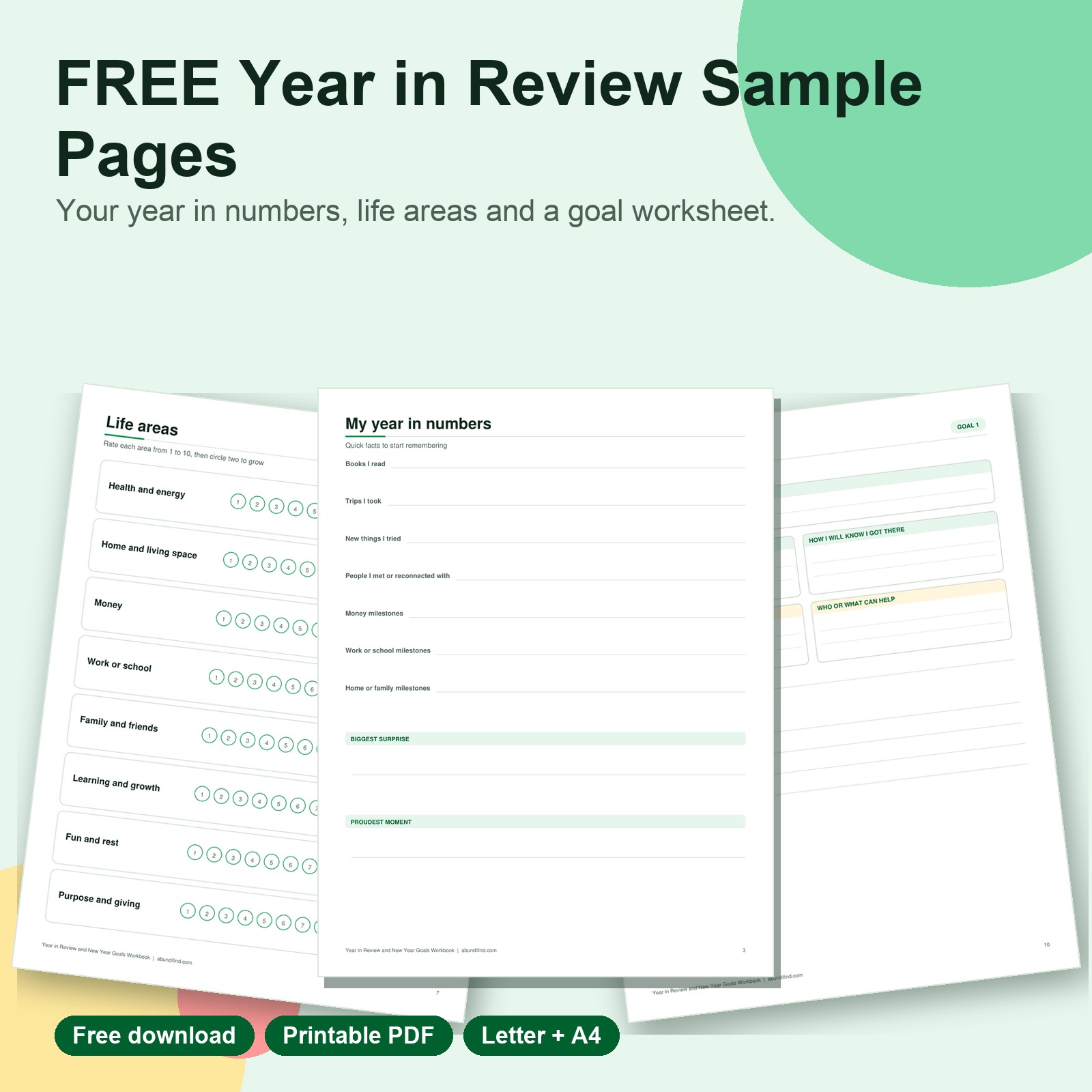
Our Year in Review and New Year Goals Workbook includes five goal worksheets, a 12-month roadmap and a habits page, plus look-back pages. Try the free sample pages first. If you are also working on a daily routine, see our Habit Tracker and Goal Planner.
This is a personal planning tool, not a guarantee of results.
You can also browse every free sample on the Free Printables page, or see all digital downloads.