A Kids Routine Chart That Works: Start with One Routine
Mornings and bedtimes go better when a child can see what comes next. A routine chart takes the nagging out of the job, because the chart does the reminding. It works best for children about three to eight, and it can be as simple as a list of five steps.
Start with one routine
Pick the part of the day that causes the most rush. For many families that is the morning. Write down the steps in the order they happen: wake up, use the toilet, brush teeth, get dressed, eat breakfast, shoes on. Keep the list to five to eight steps. You can add more later.
Make the steps visible
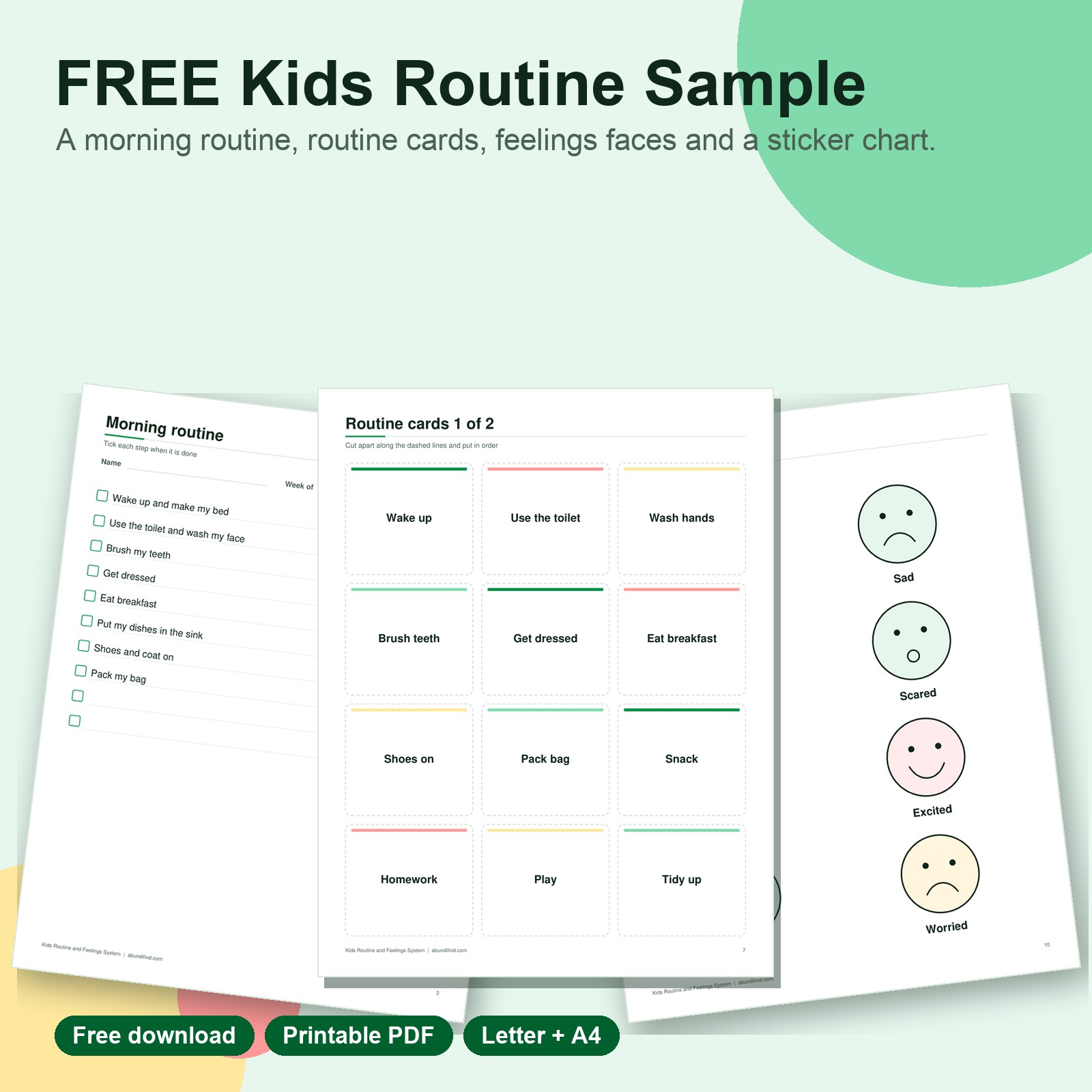
Young children understand what they can see. Put the chart at the child’s eye level, in the room where the routine happens. Cut-apart routine cards are useful because the child can move each card to a done pile. A first and then board shows two steps at a time, which suits younger children who find a long list too much.
Involve your child
Let your child choose the order of a few steps, pick the colors or place the cards. Children follow a routine they helped to make. Practice it together for a few days before you expect them to do it alone.
Praise the steps, not just the finish
Say what went well: you got dressed all by yourself. Avoid long talks about what was missed. If a step is often skipped, make it smaller or move it earlier. A routine that fails usually has too many steps or too little time.
Add a feelings check-in
Big feelings can derail a routine. A simple page of faces lets a child point to how they feel, such as happy, tired, mad or worried. A few calm-down steps, such as five slow breaths or a drink of water, give them something to try. Talk about feelings when things are calm, so the words are ready when they are not.
Keep rewards small
A sticker chart or star path is enough for many children. Rewards can be free: choosing a bedtime story, a trip to the park or a family game. Agree on the reward before you start and keep it the same for a few weeks.
Review once a week
- Ask what went well and what was hard.
- Change one thing, not everything.
- Drop steps your child now does without a reminder.
- Celebrate the week with a small treat or a family meeting.
Every child is different. Adjust any routine to your child’s age and needs. This is general parenting advice and not medical or therapy advice.
Printable routine system
Our Kids Routine and Feelings System includes morning, afternoon and bedtime charts, 24 routine cards, a first and then board, feelings faces, calm-down steps and reward charts. Try a few pages with the free routine sample.
You can also browse every free sample on the Free Printables page, or see all digital downloads.
See also: A Kids Chore Chart and Reward System That Is Easy to Keep Up.