How to Set Up a Budget Binder in One Afternoon
Some people like seeing their money plan on paper. A budget binder puts the whole picture in one place, and it only takes an afternoon to set up. This guide is general information about organizing, not financial advice.
What you need
A one-inch binder, dividers, sheet protectors or a pocket for receipts, and a pen. If you use cash envelopes, add a few envelopes. Print your pages and punch them for the binder.
Step 1: Gather the numbers
Collect last month’s bank statement, your pay information, and your bills. You are looking for three things: what comes in, what goes out regularly, and what varies. It helps to write each bill down once, with the due date and amount, on a bill tracker.
Step 2: Fill in a monthly budget
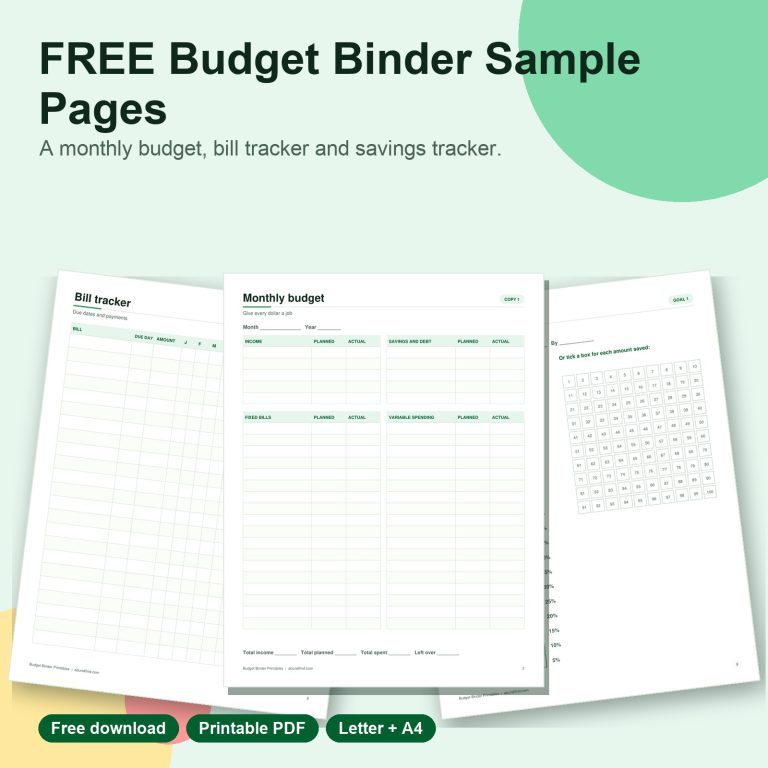
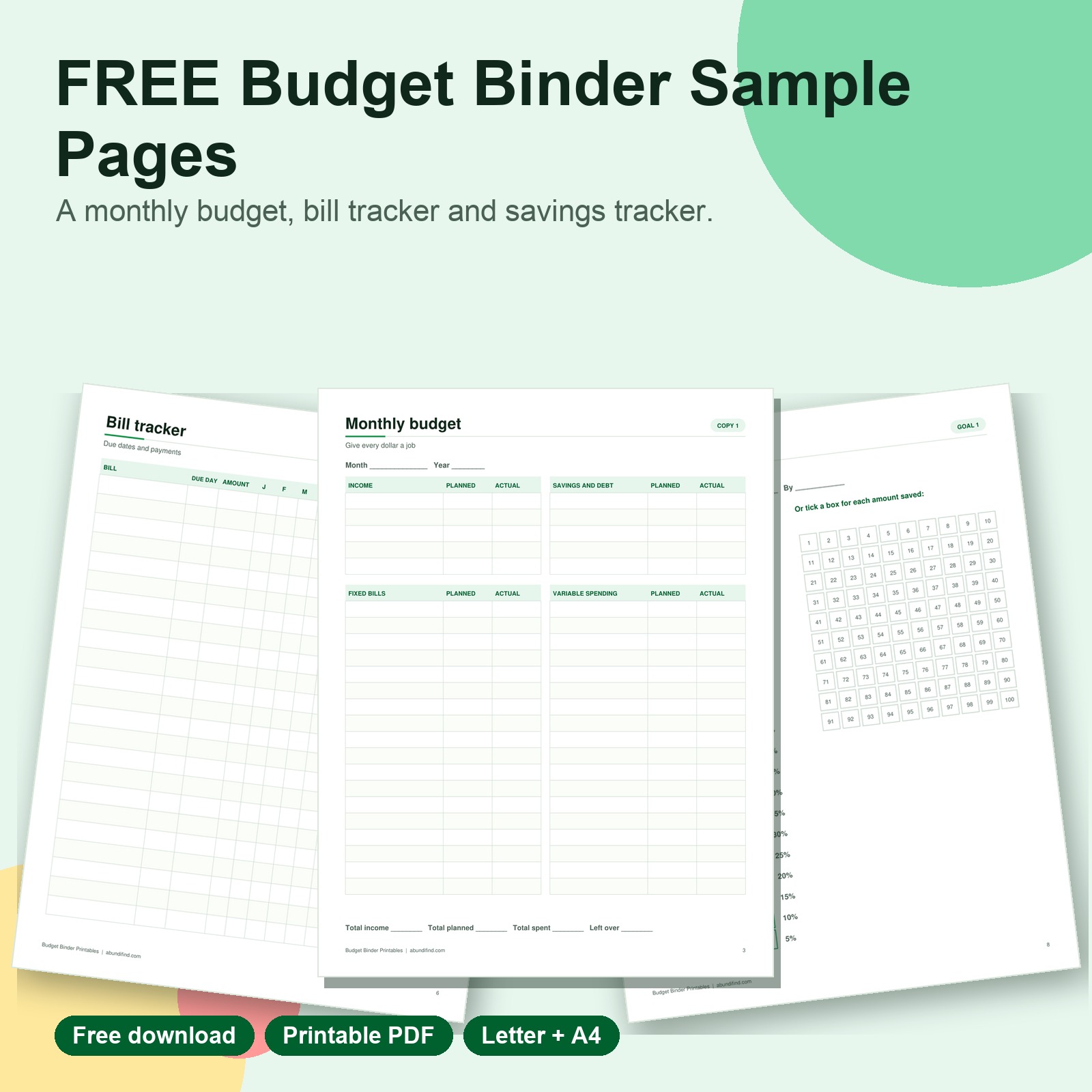
A monthly budget page has a place for income, then groups for savings, debt, fixed bills like rent, and variable spending like groceries and fuel. Write what you plan to spend in each line, then add up the totals. During the month, write the actual numbers beside the plan. Comparing the two is how you learn where your plan and your life differ.
Step 3: Add the pages that match your goals
- Debt tracker: if you are paying off balances, list each one and mark off payments. Seeing the list get shorter is motivating for many people.
- Savings tracker: a thermometer or grid you color in as you set money aside.
- Sinking funds page: small amounts set aside for things you know are coming, such as gifts, car maintenance or a yearly subscription.
- No-spend challenge: thirty days where you only buy the essentials. It is a way to notice habits.
Step 4: Cash envelopes, if they suit you
Some people put cash for a category such as groceries or entertainment into a labeled envelope each month. When it is empty, the spending in that category is done. Label sheets make this simple. Envelopes are optional, and many people use a debit card and a tracker instead.
Step 5: Set a monthly review
Pick a day each month, say the first Sunday, and take twenty minutes to look back. What went as planned? What surprised you? Make the next month’s budget a little more realistic.
Printable pages to start with
Our Budget Binder Printables pack includes a monthly budget (three copies), bill tracker, debt snowball tracker, two savings trackers, sinking funds page, 30-day no-spend challenge, cash envelope labels, annual bills overview and a monthly review page. Try three pages first with the free budget binder sample pages.
You can also browse every free sample on the Free Printables page, or see all digital downloads.
See also: Budget Binder Printables: Monthly Budget, Debt Snowball, Savings Trackers (Letter and A4), Monthly Budget Planner Spreadsheet (.xlsx) with Annual Summary and Savings Goals.